






Is It Dangerous to Leave a Charger Plugged In All the Time?

2026-01-12 15:10
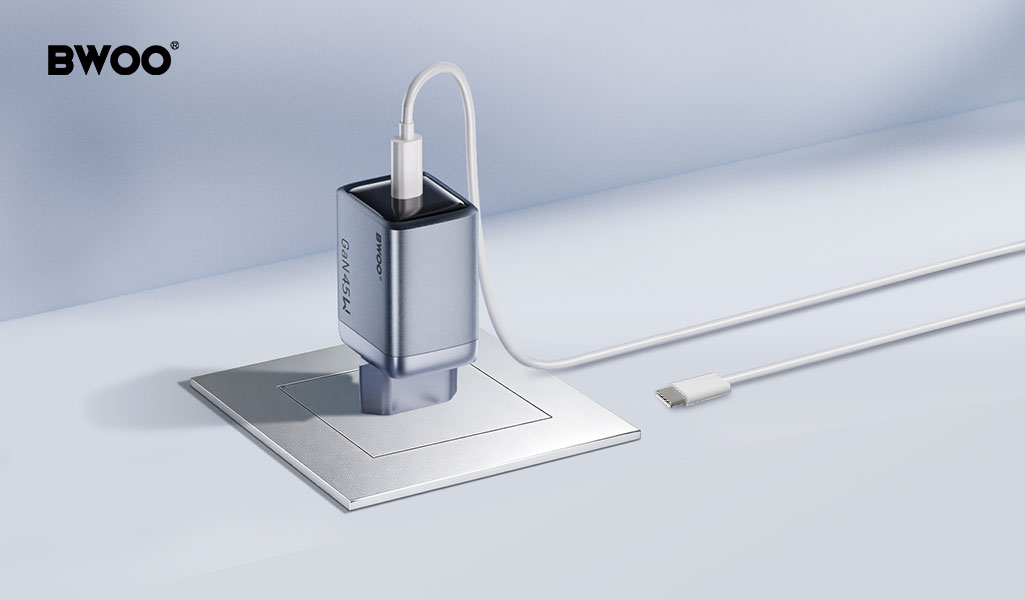
Many people share the same daily habit: after charging a phone or tablet, they unplug the device—but leave the charger in the wall socket. In homes and offices, it's not uncommon for chargers to stay plugged in for months, or even all year round.
This naturally raises several questions:
Does a charger consume electricity when nothing is connected?
Will leaving it plugged in shorten its lifespan?
More importantly, can it overheat or even cause a fire?
In this article, BWOO looks at this everyday habit from three objective perspectives—electricity cost, product lifespan, and safety risks—to help you understand what really matters, and what doesn't.
1. Electricity Cost: Does an Unused Charger Waste Power?
The short answer: yes, but the amount is extremely small.
A modern, certified charger continues to draw a tiny amount of standby power even when no device is connected. On average, this standby consumption is around 0.1–0.3W, which adds up to roughly 0.8 kWh per year if left plugged in continuously.
In practical terms, this extra electricity cost is almost negligible for a household.
BWOO has published a separate in-depth article analyzing charger standby power consumption and real-world electricity costs, including measurement methods and data comparisons. <Does Chargers Use Electricity When Not Charging>
2. Lifespan: Does Constant Plugging Reduce Charger Life?
While electricity cost is not a real concern, long-term durability is a more technical issue.
A charger is not a "perpetual machine". Its internal components age over time, especially when continuously energized.
Key Component: Electrolytic Capacitors
One of the most lifespan-sensitive components inside a charger is the electrolytic capacitor.
Simple explanation:
An electrolytic capacitor works like a tiny liquid reservoir that smooths and stabilizes electrical current. Inside, it contains an electrolyte that slowly evaporates or degrades over time.
What Happens When It Ages?
When a capacitor ages:
Its filtering capability decreases
Output current becomes less stable
Electrical noise and voltage ripple increase
From the outside, the charger may still "work", but internally it is no longer performing optimally.
Long-term impact:
Using a heavily aged charger may:
Accelerate smartphone battery degradation
Cause unstable charging behavior
In extreme cases, lead to touchscreen malfunctions or charging interruptions
Practical Advice
Leaving a charger plugged in will not cause immediate failure, but continuous power does slightly accelerate component aging.
If your goal is to maximize the charger's service life and maintain stable output quality over several years, unplugging it when not in use is a better habit.
3. Safety: The Real Risk of Leaving a Charger Plugged In
Compared to electricity cost, safety is the most important factor to consider.
3.1 Power Surges and Grid Instability
What is a power surge?
Power surges are sudden spikes in voltage caused by:
Lightning during thunderstorms
Switching of large appliances (air conditioners, elevators, industrial equipment)
Grid faults
Why it matters:
A charger that remains plugged in is constantly exposed to the power grid. If a strong surge occurs, internal protection components (such as MOVs or surge suppression circuits) may fail.
In low-quality chargers, this can result in:
Internal short circuits
Overheating
Smoke or fire in extreme cases
3.2 Poor Materials and Heat Accumulation
Not all chargers are built the same.
Low-cost, uncertified chargers often suffer from:
Inferior PCB layout
Low-grade capacitors
Inadequate insulation distances
Plastic housings with poor flame-retardant ratings
Even the small amount of heat generated during standby can accumulate over time if heat dissipation is poor.
Worst-case scenario:
If internal materials cannot withstand heat or electrical stress, spontaneous failure or ignition becomes a real risk.
This is why BWOO, as a professional charger manufacturer, places strong emphasis on component selection, thermal design, and long-term aging tests during product development.
3.3 Moisture and Foreign Objects
Environmental factors are often overlooked.
Potential risks include:
Humid locations (kitchens, near bathrooms)
Water splashes or condensation
Conductive dust or metal debris entering exposed connectors
If moisture or foreign conductive material bridges internal contacts, it can easily cause a short circuit—even when no device is charging.
4. Practical, Science-Based Usage Recommendations
After understanding the risks, how should chargers be used more safely and rationally?
Look for Certifications
Choose chargers with recognized safety certifications such as 3C, CE, UL, or FCC. These marks indicate that the product has passed:
Long-term aging tests
Over-voltage and surge protection tests
Thermal safety evaluations
Pay Attention to the Environment
Avoid placing chargers under pillows, blankets, or soft furniture
Ensure adequate ventilation
Keep chargers away from humid or wet areas
Know When to Unplug
Strongly recommended to unplug when:
You are away from home for an extended period
During severe thunderstorms
In environments with unstable power supply
Generally safe to leave plugged in:
During daily daytime use
With high-quality, certified brand chargers
In dry, well-ventilated indoor environments
There is no need for excessive anxiety—but informed caution matters.
The BWOO charger series is known for its safety, with each one certified and tested thousands of times.
5. Summary: Is Leaving a Charger Plugged In Dangerous?
Electricity cost: Negligible
Lifespan: Continuous plugging slightly accelerates aging, but not dramatically
Safety: The real risk depends on charger quality, materials, and environment
A well-designed, certified charger from a reputable manufacturer like BWOO is built to withstand long-term use and standby operation. However, unplugging chargers when not needed—especially in high-risk situations—is still the safest and most responsible practice.
Small habits, when guided by proper knowledge, can make a real difference in both safety and product longevity.
Related readings:
Why Choosing a GaN Charger is Smarter Decision
Top 10 Power Bank & Charger Manufacturers in China (2025)


