



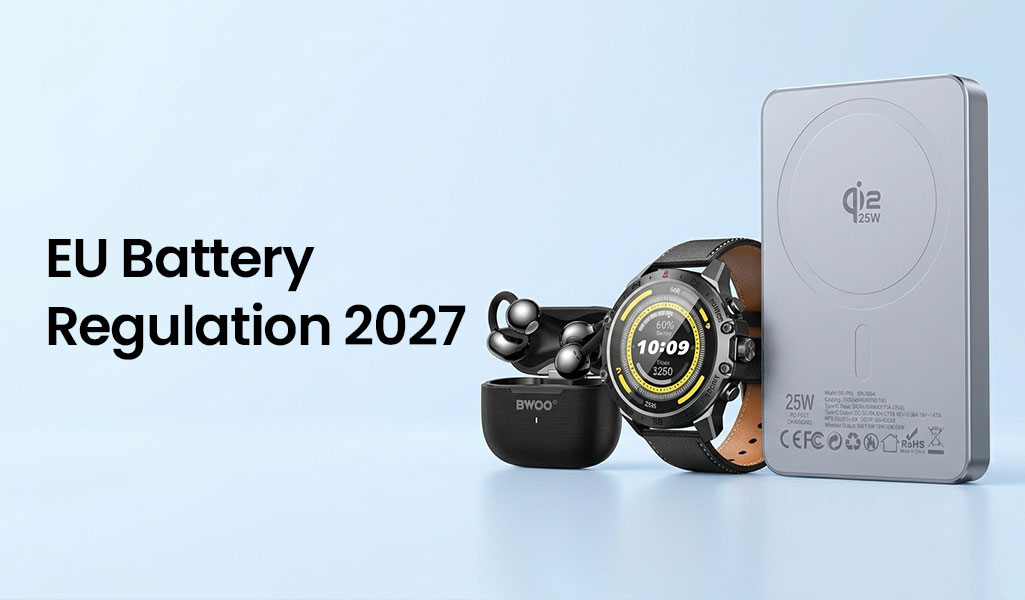
The EU Batteries Regulation is moving into an important implementation phase for manufacturers, importers and distributors of portable electronics. One date deserves particular attention: 18 February 2027, when Article 11 of Regulation (EU) 2023/1542 becomes applicable. The provision addresses the removability and replaceability of portable batteries incorporated into products placed on the EU market.
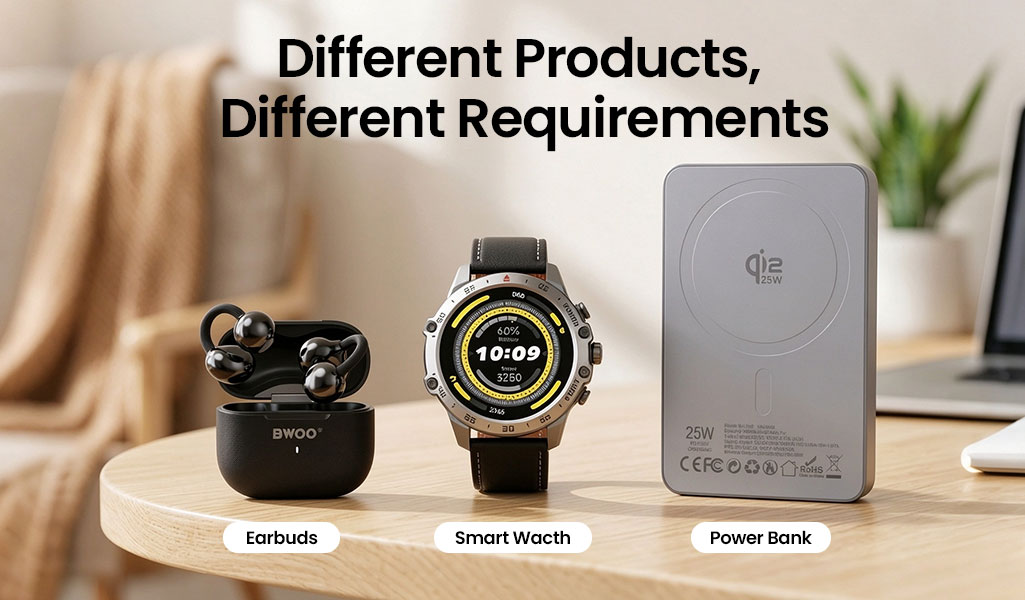
For mobile accessory businesses, the practical impact depends on the product category and battery design. A smartwatch, a pair of wireless earbuds and a power bank may all contain rechargeable batteries, but they do not necessarily fall under the same interpretation. Buyers should avoid applying one broad rule to every battery-powered accessory.
1. What Changes on 18 February 2027?
Article 11 generally requires portable batteries incorporated into products to be readily removable and replaceable by end-users during the product's lifetime. The regulation defines what counts as readily removable, including limits on specialised tools, proprietary tools, thermal energy or solvents. The exact obligations and derogations depend on the product and the relevant paragraphs of Article 11.
The requirement concerns the entire portable battery, rather than requiring consumers to replace individual cells inside a battery pack. The regulation also addresses spare-part availability and software that could impede replacement. For the legal wording, consult the consolidated EU Batteries Regulation.
2. Removable and Replaceable Are Different
A battery is removable when it can be taken out of a product safely without damaging the battery or device. Replaceability goes further: the removed battery can be replaced with another battery so that the product can continue operating without compromising function, performance or safety. A battery that can only be extracted by destroying the enclosure may not meet the relevant definition.
This distinction matters during product design and sourcing. Buyers should ask suppliers to explain the intended service method and provide product-specific design information rather than relying on a general statement such as “battery replaceable.”
3. Which Mobile Accessories May Be Affected?
The first step is to identify whether the product incorporates a portable battery within the meaning of the regulation and whether a specific derogation applies. Wireless earbuds, charging cases, smartwatches, fitness trackers and other compact electronics may require category-specific assessment.
The European Commission's 2026 guidance explains that products whose primary function is to supply electrical energy to other products—such as rechargeable power banks—may themselves be considered portable batteries. In that situation, Article 11's product-incorporating-a-portable-battery requirement may not apply in the same way. Product classification matters; do not assume every product with a lithium battery is treated identically.
The Commission adopted a delegated act on 14 July 2026 adding six categories to the list of derogations. These include wearable devices such as smartwatches and fitness trackers, subject to the act's conditions. See the Commission update on battery-removal exemptions.
4. What Should Importers and Distributors Ask Suppliers?
A practical supplier review should begin with the exact product model, intended market and battery configuration. Ask the supplier to identify the applicable rule, explain whether a derogation is being relied upon and provide the supporting technical rationale. A category name alone is not enough to establish an exemption.
Confirm the product's legal classification and whether it incorporates a portable battery.
Request battery design, service method and product-specific technical documentation.
Ask whether a derogation applies and what conditions must be met for the exact product.
Check spare-part availability, replacement instructions and after-sales arrangements where relevant.
Ensure manuals, packaging and online claims do not overstate removability or replaceability.
For buyers sourcing multiple categories, maintain a model-level compliance record. BWOO's Smart Watch collection and Power Bank collection can help identify product categories for a sourcing discussion, but legal status must be confirmed for each model.
5. Build Compliance into Product Planning
The February 2027 date should not be treated as a last-minute packaging update. Battery architecture can affect enclosure design, tooling, waterproofing, dimensions, repair instructions and long-term service planning. If a product is still in development, discuss these factors before the design is frozen.
Distributors do not need to interpret every technical issue alone. Obtain model-level information from the manufacturer, confirm the importer's responsibilities and seek specialist legal or conformity advice where needed. Keep a record of the applicable regulation version and delegated acts.
Conclusion
The EU Battery Regulation introduces important requirements for products containing portable batteries, but the details are product-specific. With Article 11 applying from 18 February 2027, mobile accessory brands and buyers should review battery classification, removability, replaceability and relevant derogations now. Ask for evidence tied to the exact model rather than relying on broad supplier assurances.
Explore BWOO's mobile accessory collections and contact the team to discuss model specifications, product documentation and market requirements.
FAQ
Which mobile accessories may be affected by the EU battery rules?
Portable electronics that incorporate a portable battery may be in scope, depending on the product's legal classification and any applicable derogation. Examples may include wireless earbuds and their charging cases, smartwatches and fitness trackers. Each product should be assessed individually.
Are power banks subject to the same battery-removal requirements as other accessories?
Not necessarily. A power bank's primary function is to supply electrical energy to other products, so it may be classified differently from a product that incorporates a portable battery. Confirm the classification of the exact model before making a compliance decision.
Are smartwatches and fitness trackers exempt?
A 2026 Commission-adopted delegated act adds qualifying wearable devices, including smartwatches and fitness trackers, to the derogation list. The conditions and current legal status should be checked for the specific product before relying on an exemption.
What is the difference between a removable and a replaceable battery?
Removable means the battery can be taken out safely without damaging the battery or device. Replaceable means another battery can be installed so the product can continue to operate as intended. The two concepts are related, but they are not identical.
What battery information should buyers request from a supplier?
Ask for the exact product classification, battery design details, service or replacement method, supporting technical documents and the legal rationale for any claimed derogation. Keep the information on a model-by-model basis.


