

Industry Insight

The Ultimate Guide to Global Phone Accessories B2B Sourcing

2026-06-25 10:38

phone accessories B2B sourcing guide.jpg


The global phone accessories market surpassed $120 billion in 2026, with B2B wholesale procurement serving as the backbone of brand competitiveness across every product category—from chargers and cables to cases and screen protectors. However, navigating the journey from supplier identification to quality assurance is fraught with complexity, especially for international buyers who may face language barriers, cultural differences, and unfamiliar regulatory landscapes.

This guide provides a systematic, step-by-step framework for phone accessories B2B procurement—covering sourcing channels, supplier qualification, cost analysis, quality control, and logistics strategy. By following this framework, procurement managers and business owners can reduce sourcing risks, negotiate better prices, and build supply chain relationships that scale with their business.


Step 1: Supplier Sourcing Channels

The foundation of successful procurement is finding the right suppliers through the right channels. Each sourcing platform and method has its unique strengths and limitations, and the optimal approach often involves using multiple channels simultaneously to cross-verify supplier credentials and pricing.

Channel

Strengths

Best For

Caveats

Alibaba.com

Largest supplier concentration, Trade Assurance protection, online transaction safeguards

Small-to-medium pilot orders

Verify Gold Supplier and Verified Supplier badges independently

Global Sources

Focus on consumer electronics, stricter supplier vetting

Mid-to-high-end accessory procurement

Combine with trade show attendance for best results

1688.com

Direct factory pricing, lowest unit costs

High-volume orders with a local China agent

Chinese-language only; requires Mandarin communication capability

HK Electronics Fair / Shenzhen Gifts Fair

In-person samples, relationship building

First-time partnerships, bulk purchases

Pre-book meetings with target exhibitors

Made-in-China.com

Category-specific segmentation, mature RFQ mechanism

Specific categories (chargers, cables, cases)

Cross-verify supplier credentials

For most international buyers, a combination of Alibaba.com for initial discovery and trade fair attendance for in-person verification yields the best results. 1688.com, while offering the lowest prices, requires a trusted local agent to handle communication, payment, and quality control on your behalf.


Step 2: Supplier Qualification Checklist

Before placing any order, regardless of the supplier's online ratings, conduct a systematic qualification review. This process typically takes 1-2 weeks and should never be skipped, even for seemingly urgent orders.

  • Business license verification: Check registration details, business scope, and incorporation date through China's National Enterprise Credit Information Publicity System. A factory incorporated less than 2 years ago warrants additional scrutiny.

  • Certification documents: Request original photos or scanned copies of CE, FCC, RoHS, ISO 9001 certificates. Verify each certificate on the issuing body's official database—counterfeit certifications are unfortunately common in the industry.

  • Production capacity: Confirm monthly output, number of production lines, and automation level. A factory producing 10,000+ chargers per month should have at least 2-3 dedicated production lines with automated testing equipment.

  • Client references: Request 2–3 anonymized case studies for similar product categories. Follow up with these references when possible, asking about on-time delivery, defect rates, and communication responsiveness.

  • Third-party audit reports: Prioritize suppliers with existing SGS, Bureau Veritas, or TÜV factory audit reports. These reports provide independent verification of quality management systems, social compliance, and production capabilities.


Step 3: Cost Structure and Pricing Analysis

FOB Pricing Components

Understanding the full cost breakdown is essential for accurate budgeting and effective negotiation. FOB (Free On Board) pricing includes all costs up to the point where goods are loaded onto a vessel at the port of export.

  • Unit product cost: The base manufacturing cost including standard packaging. This is typically the largest component, accounting for 60-70% of FOB price.

  • Mold fee: One-time investment for custom products such as unique phone case designs. Mold fees range from $300 to $3,000 depending on complexity and material.

  • Logo printing or laser engraving fee: Typically $0.05–$0.20 per unit added to the unit price, depending on the printing method and logo complexity.

  • Certification amortization cost: For products requiring special certification like MFi (Made for iPhone), the chip licensing fee alone can add $2-3 per unit.

  • Packaging customization: Custom retail boxes with your brand design typically add $0.30–$1.00 per unit versus standard plain packaging.

Typical Phone Accessory MOQ and FOB Price Ranges (2026 Reference)

Category

MOQ

FOB Unit Price Range (USD)

Notes

GaN 65W Charger

500–1,000 pcs

$5.50–$8.00

GaN chip accounts for ~40% of BOM cost

Qi2 Magnetic Wireless Charger

500–2,000 pcs

$4.00–$7.50

Includes magnet module; Qi2 certified

USB-C Fast-Charging Cable (1m)

1,000–3,000 pcs

$1.20–$2.50

MFi-certified version adds $2+

TPU Phone Case

500–2,000 pcs

$0.50–$1.50

Mold fee $300–$800 one-time

Magnetic Power Bank (5,000mAh)

500–1,000 pcs

$8.00–$15.00

Qi2-certified carry 20-30% premium

These price ranges reflect mid-2026 market conditions for factory-direct sourcing from Shenzhen and Dongguan manufacturers. Prices fluctuate based on component costs—particularly GaN chips and lithium battery cells—as well as order volume and seasonal demand. Always request updated quotations within 30 days of placing an order, as component prices can shift significantly within a single quarter.


Step 4: Sampling and Inspection Workflow

A rigorous sampling and inspection protocol is the most effective way to prevent costly quality issues. The following four-stage workflow is used by leading global brands and procurement agencies.

  • Pre-production sample: Confirm appearance, material, color, and logo placement before mass production begins. This sample serves as the quality benchmark against which all production units will be measured. Reject and iterate until the sample perfectly matches your specification.

  • Production sample: Randomly drawn during production to verify batch consistency. Request production samples at the 10%, 50%, and 90% completion milestones to catch quality drift early.

  • Third-party inspection: Engage SGS, Intertek, or TÜV to perform AQL 2.5/4.0 standard sampling inspections before shipment. For critical safety products like chargers, use AQL 1.0 (tighter standard) for electrical safety tests.

  • Key test items: Drop test (1.5m onto concrete), insertion/removal lifecycle test (10,000+ cycles for USB-C connectors), over-temperature protection test, and EMC compliance test. These four tests catch over 90% of common charger failure modes.


Step 5: Logistics and Tariff Planning

Logistics costs can represent 8-15% of total landed cost, making transportation mode selection a significant factor in overall profitability. The optimal mode depends on order volume, urgency, product value density, and destination market.

  • Sea freight (25–35 days): Ideal for large-volume, non-urgent orders. A 40HQ container holds approximately 80,000–100,000 phone cases or 20,000–30,000 GaN chargers. Ocean freight rates have stabilized in 2026 after the volatility of 2021-2024.

  • Air freight (5–8 days): Suitable for high-unit-value, lightweight products such as GaN chargers and wireless earbuds. Air freight costs are typically 4-6x higher than sea freight but offer dramatically faster delivery for time-sensitive launches.

  • China-Europe Railway Express (15–20 days): Best cost-performance ratio for Central and Eastern European markets, offering a middle ground between sea and air in both transit time and cost.

  • US tariff alert: Section 301 tariffs still apply to certain Chinese-origin phone accessories, particularly those with integrated lithium batteries. Verify HTS codes in advance and consider whether your product falls under any exclusion categories.

  • EU compliance: CE marking and WEEE registration are mandatory for electronic accessories entering the EU market. Factor in 4-6 weeks for testing and certification if your supplier does not already hold EU compliance documentation.


Step 6: Long-Term Supplier Relationship Management

The most successful procurement strategies treat supplier relationships as strategic partnerships rather than transactional arrangements. Suppliers who view you as a long-term partner will prioritize your orders during capacity constraints, share new technology roadmaps, and offer preferential pricing as volumes grow.

  • Quarterly performance reviews: Track on-time delivery rate (target ≥95%), quality pass rate (target ≥98%), and average response time. Share these metrics transparently with your supplier and collaboratively address any gaps.

  • Annual price negotiations: Leverage volume growth for tiered pricing discounts. Structure agreements so that both parties benefit from scale—for example, a 2% price reduction for every 50% increase in annual order volume.

  • Joint new product development: Integrate suppliers into your product roadmap to shorten concept-to-mass-production cycles. Suppliers who are involved early can suggest component substitutions that reduce cost without sacrificing performance.

  • Payment terms optimization: As trust builds, negotiate improved payment terms such as 30% deposit / 70% against BL copy instead of 100% upfront, improving your working capital position.


BWOO: Your Professional B2B Phone Accessories Brand

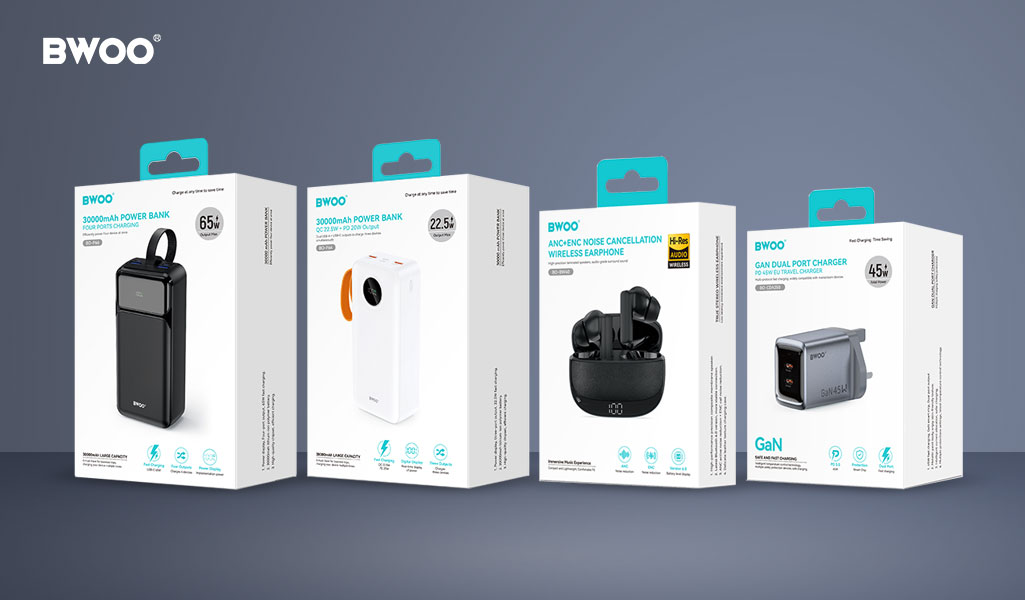
BWOO is a professional B2B phone accessories brand dedicated to serving global wholesalers, distributors, and retailers with our own branded product portfolio. We focus exclusively on B2B business—we never compete with our clients' C-end business, ensuring a zero-conflict partnership that protects your market position.

Our core advantages include: competitive B2B pricing enabled by our focused business model, a comprehensive product matrix covering GaN chargers, Qi2 wireless charging accessories, phone protection products, and cables, and professional brand support services to help you grow your business. At BWOO, we succeed only when our B2B partners succeed.


Conclusion

Successful B2B procurement is not about finding the lowest price—it is about building a stable, compliant, and scalable supply chain that can grow with your business. A supplier who is 10% cheaper but delivers 3 weeks late or ships products with a 5% defect rate will ultimately cost far more than a reliable partner with slightly higher unit prices.

Use this guide as your roadmap for your next sourcing decision. Start with channel selection, proceed through systematic qualification, negotiate with full cost transparency, implement rigorous quality control, and invest in long-term supplier relationships. The phone accessories market will continue to grow through 2030, and the brands with the strongest supply chains will capture the largest share of that growth.

Quick Navigation
65W Chargers: Pras and Cons
Advantages of 65W Chargers;
Disadvantages of 65W Chargers;
65W Chargers: Pras and Cons
Advantages of 65W Chargers;
Disadvantages of 65W Chargers;
Advantages of 65W Chargers;
Disadvantages of 65W Chargers;
65W Chargers: Pras and Cons
Advantages of 65W Chargers;
Disadvantages of 65W Chargers;
Inquiry
You can use the form below to get in touch with Portworld.
Name*
Email*
Phone*
Company Name
Description*