



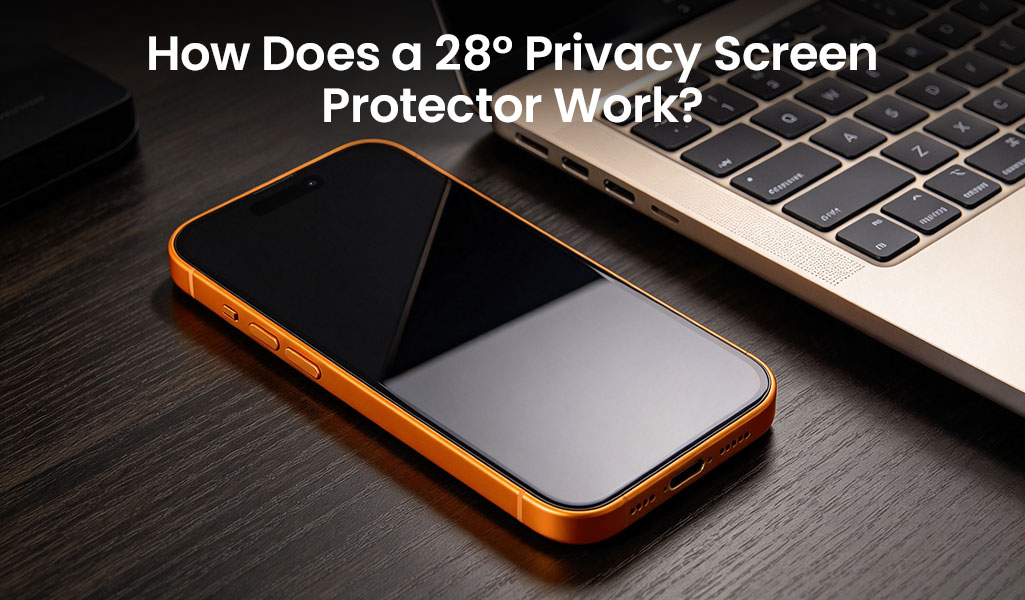
A privacy screen protector is designed to make a phone display easier to read from the front and harder to read from the side. It can be useful when people check messages, emails or work information in public places, on public transport or in a shared office. But a number such as 28° is only useful when buyers understand how it is defined and measured.
BWOO's BO-IP17AP privacy screen protector for iPhone 17 Pro Max lists a 28° privacy filter, 360° privacy protection, a model-specific fit, scratch-resistant hardness and an anti-fingerprint/anti-oil coating. These are product-page claims; before comparing them with another model, confirm the manufacturer's angle definition and test conditions rather than assuming all brands use the same measurement.
1. How privacy filtering works
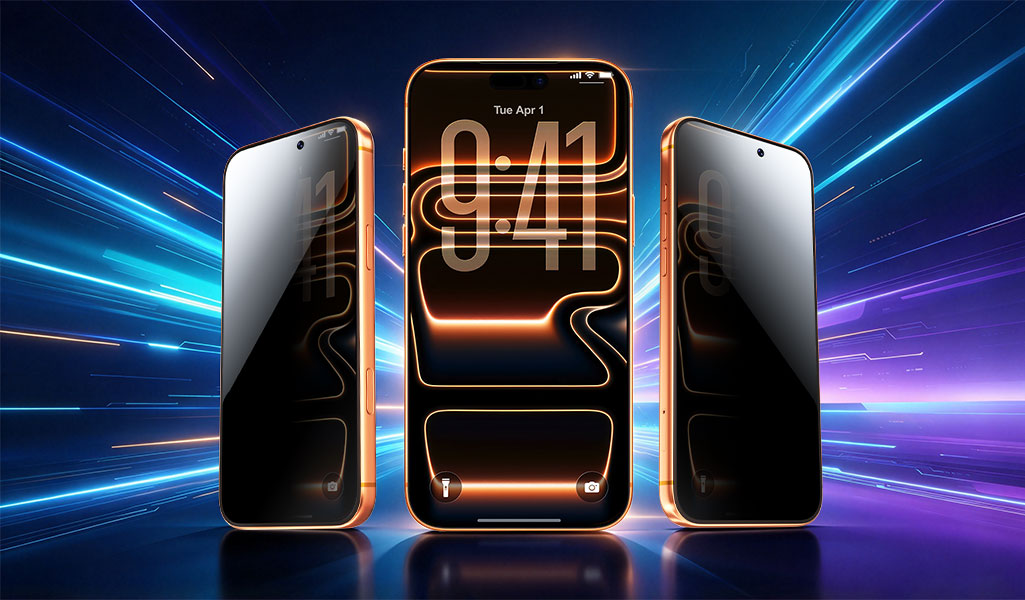
At a broad level, a privacy filter controls the directions from which display light remains visible. Many privacy-screen technologies use an optical layer with microscopic light-blocking structures, often compared with tiny window blinds: light traveling toward a viewer in front can pass through more easily, while light traveling from the side is restricted. The exact construction and viewing behavior vary by product, so a general explanation should not be treated as a confirmed description of every model's internal structure.
This is also why a privacy protector can involve trade-offs. Restricting side visibility may affect apparent brightness, clarity or color when viewed from off-center positions. The outcome depends on the display, the protector's optical design, installation and the surrounding light. A product should therefore be tested on the intended phone model, not evaluated only from a promotional diagram.
2. What does “28°” actually tell you?
There is no safe way to compare a degree figure from two suppliers without checking their definitions. A number may refer to a stated viewing boundary, a measurement point or another product-specific specification. Do not assume “28°” means 28 degrees to either side of the center line, or that it describes a 28-degree total viewing cone, unless the supplier explicitly confirms that interpretation.
For a meaningful comparison, ask for the following details: the angle reference line, whether the angle is measured on one side or across a total cone, the criterion for deciding when the screen is no longer readable, test brightness, viewing distance and whether the result is the same in portrait and landscape orientation. A clear diagram and a test report are more valuable than a standalone number.
3. What else should buyers check besides the privacy angle?
Front-view clarity and touch response
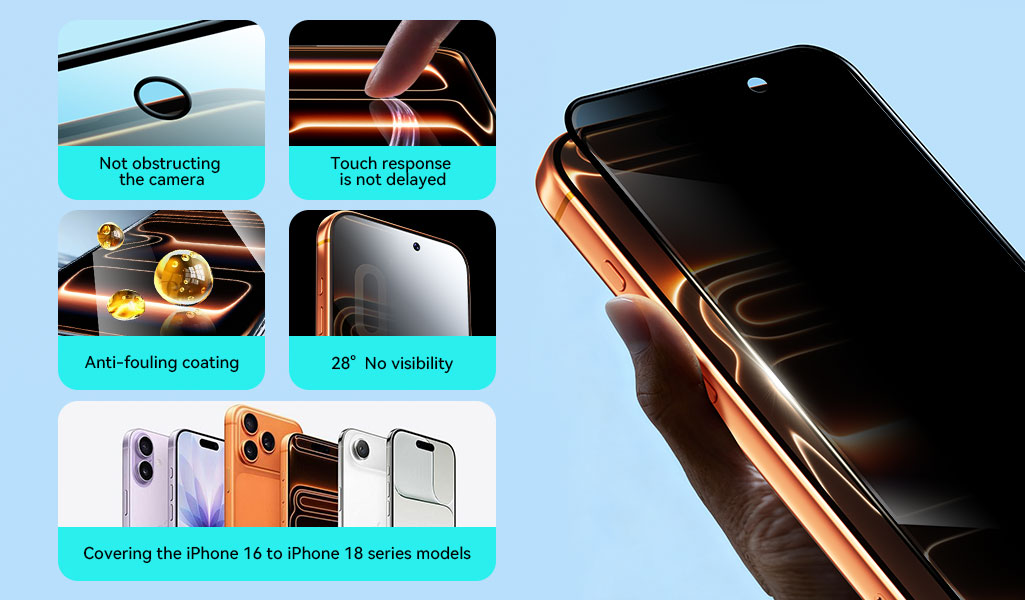
The primary user still needs a clear front view and reliable touch response. Evaluate brightness at normal settings, text readability, color appearance, edge coverage and touch gestures after installation. A privacy filter that restricts side viewing but makes the display unpleasant to use may generate returns or negative reviews.
Fit, surface coating and durability claims
Confirm the protector's exact phone model, cutouts, edge design and installation method. Anti-fingerprint and anti-oil coatings can help keep the surface cleaner, but performance should be checked after normal handling and cleaning. If a product is described as “9H,” ask which test method and substrate the rating refers to; it should not be interpreted as a universal measure of drop-proof performance or as nine times the hardness of ordinary glass.
Define “360° privacy” in measurable terms
Product pages sometimes use phrases such as “360° privacy protection.” Before using the phrase in a comparison or retail listing, confirm whether it refers to restriction from horizontal and vertical side views, a specific viewing setup or another defined test. Broad marketing language should not replace clear explanation of what was tested and what users can reasonably expect.
For distributors, a simple sample protocol is useful: install the protector on the target phone, view it from the front and several side positions, test touch gestures, check brightness and inspect the edges. Record the phone model, lighting, angle definition and results so different suppliers can be compared consistently.
You can compare the stated features with the official BWOO BO-IP17AP product page. For other accessory types, use the BWOO product catalog to keep model and category details separate in purchasing records.
Conclusion
A privacy screen protector works by narrowing the directions from which the screen can be read. The key to understanding a “28°” specification is not guessing what the number means, but checking its reference line, test method and real-world result. For B2B sourcing, evaluate the angle claim alongside front-view clarity, touch response, fit, coating and the quality of the supporting documentation.
FAQ
Does 28° mean the screen is invisible beyond exactly 28 degrees?
Not necessarily. The meaning depends on the manufacturer's definition and test method. Ask for a diagram and the criterion used to classify a side view as unreadable.
Does a privacy screen make the display completely invisible from every side?
Do not assume so. Results vary by optical design, brightness, orientation and viewing conditions. Confirm what a “360°” claim means for the specific product.
Will a privacy protector make the screen darker?
It may reduce apparent brightness or change the viewing experience. Test the installed protector at normal display settings and in different lighting conditions.
Does a 9H label mean the screen protector cannot break?
No. A hardness label should be interpreted according to the specified test method. It is not a guarantee against all scratches, cracks or drops.
What should a distributor request before placing a bulk order?
Confirm the supported phone model, angle definition, test conditions, fit, touch response, coatings, packaging claims and any relevant test documentation.
Review the model-specific specifications on the BWOO BO-IP17AP privacy screen protector page, and request a defined test method when comparing privacy-angle claims across suppliers.


